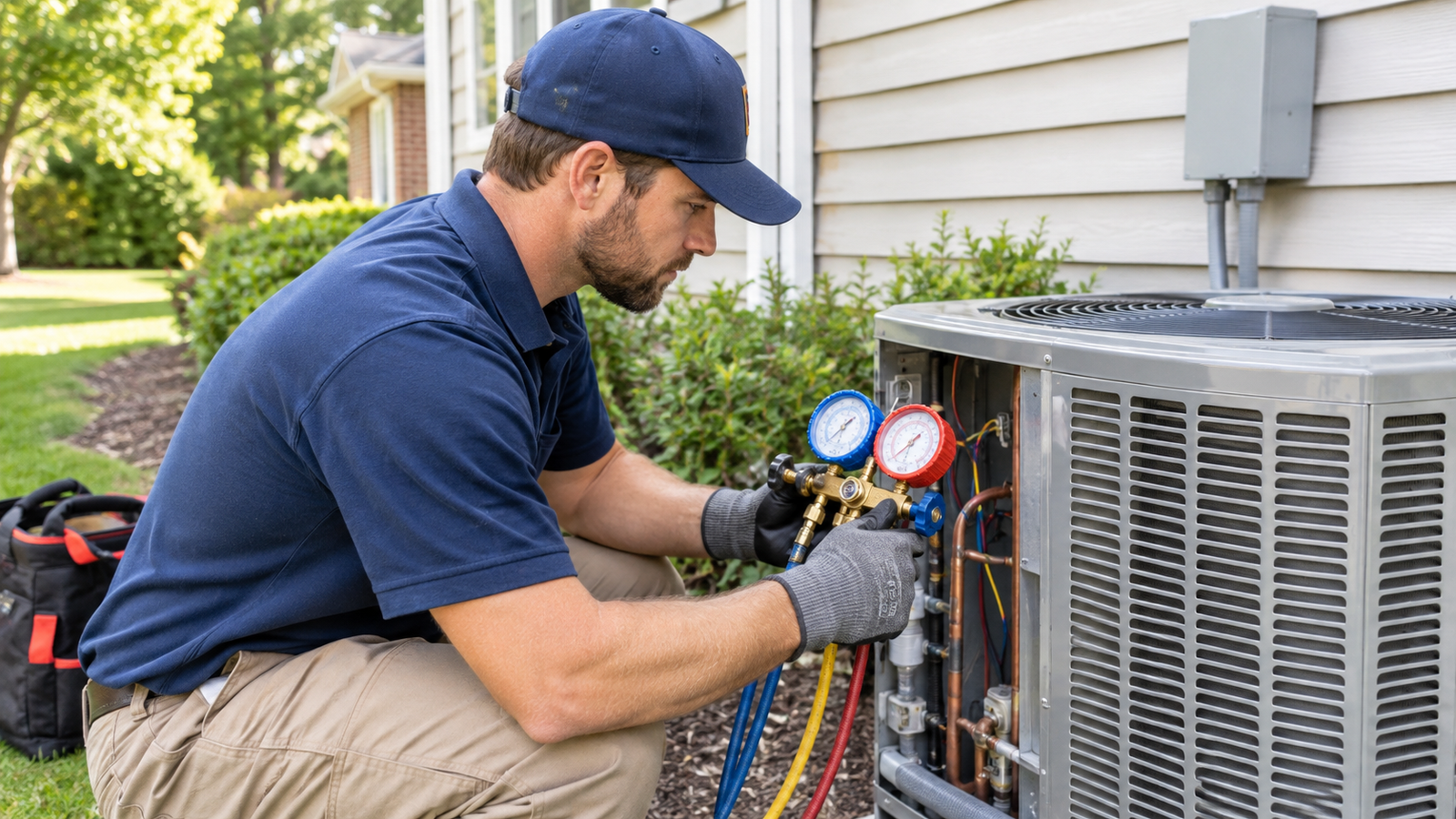
Heat Pump Repair Guide: Common Problems, Fixes and Costs
A heat pump is an energy-efficient heating and cooling system that keeps indoor temperatures comfortable throughout the year. It works by transferring heat rather than generating it directly, which helps reduce energy consumption. However, like any HVAC equipment, a heat pump can develop mechanical, electrical, or airflow problems over time.
Knowing when to schedule heat pump repair can help prevent minor issues from turning into expensive breakdowns. Some problems, such as dirty filters or blocked outdoor units, can be addressed through basic maintenance. Others require professional diagnostics and specialized tools.
This guide covers the most common heat pump problems, their possible causes, repair options, average costs, and signs that indicate it is time to call an HVAC technician.
How Does a Heat Pump Work?
A heat pump transfers heat between the indoor and outdoor environments using a refrigerant cycle. During winter, it extracts heat from outdoor air and moves it inside. In summer, the process reverses, allowing the system to remove indoor heat and release it outdoors.
The main components include:
- Outdoor unit: Contains the compressor, condenser coil, and outdoor fan.
- Indoor unit: Distributes conditioned air throughout the building.
- Compressor: Circulates refrigerant and maintains the pressure needed for heat transfer.
- Reversing valve: Changes the direction of refrigerant flow between heating and cooling modes.
- Expansion valve: Regulates refrigerant flow into the evaporator coil.
- Thermostat: Controls operating modes and temperature settings.
- Air filters: Capture dust and other airborne particles before air circulates through the system.
A problem with any of these components can affect heating performance, cooling capacity, or overall energy efficiency.
7 Common Heat Pump Problems and Their Fixes
Identifying the symptoms of a malfunctioning system makes it easier to understand what type of repair may be necessary. Below are seven common issues homeowners may encounter.
1. Heat Pump Is Not Heating or Cooling Properly
One of the most common reasons homeowners request heat pump repair is insufficient heating or cooling.
If the system runs continuously but cannot maintain the desired temperature, several issues may be responsible:
- Dirty or clogged air filters.
- Blocked indoor or outdoor coils.
- Incorrect thermostat settings.
- Low refrigerant levels.
- Compressor or reversing valve problems.
- Restricted airflow through the ductwork.
Possible fixes:
Start by checking the thermostat and replacing a dirty air filter. Make sure furniture, curtains, or other objects are not blocking indoor vents. Remove leaves, dirt, and debris from around the outdoor unit while keeping the manufacturer’s required clearance.
If these steps do not improve performance, an HVAC technician should inspect the refrigerant circuit, coils, compressor, and airflow.
2. Heat Pump Is Blowing Cold Air in Heating Mode
A heat pump can occasionally deliver air that feels cooler than expected, even when operating normally. Unlike a traditional furnace, it often produces moderately warm air rather than very hot air.
However, consistently cold air may indicate a malfunction.
Common causes include:
- Incorrect thermostat configuration.
- A reversing valve that is stuck or malfunctioning.
- Low refrigerant charge.
- Defrost control problems.
- Compressor failure.
- Incorrect auxiliary heat operation.
Possible fixes:
Check that the thermostat is set to heating mode and that the temperature setting is appropriate. If the system continues blowing cold air, professional diagnostics are recommended.
A technician can test the reversing valve, measure refrigerant pressures, inspect electrical connections, and verify auxiliary heating operation.
3. Heat Pump Makes Unusual Noises
Some operating sounds are normal. Fans, compressors, and refrigerant movement naturally produce noise. However, sudden or unusually loud sounds can indicate mechanical problems.
Common noises and their possible causes include:
| Noise | Possible cause |
|---|---|
| Grinding | Worn motor bearings |
| Rattling | Loose panels or components |
| Buzzing | Electrical problems or a failing contactor |
| Hissing | Refrigerant movement or a possible leak |
| Banging | Loose or damaged mechanical parts |
| Squealing | Motor or fan bearing problems |
Possible fixes:
Turn off the system if you hear grinding, banging, or other severe mechanical noises. Avoid opening electrical compartments or attempting to repair moving components.
An HVAC technician can identify the source and determine whether the system needs a motor replacement, tightened components, electrical repair, or refrigerant leak investigation.
4. Heat Pump Keeps Turning On and Off
Frequent starting and stopping is known as short cycling. It can reduce comfort, increase electricity consumption, and place additional stress on the compressor.
Potential causes include:
- An oversized heat pump.
- A dirty air filter.
- Restricted airflow.
- Thermostat placement or calibration problems.
- Refrigerant charge issues.
- Electrical control malfunctions.
Possible fixes:
Replace clogged filters and check whether supply and return vents are unobstructed. If short cycling continues, a technician should inspect the thermostat, refrigerant system, electrical controls, and equipment sizing.
Repeatedly restarting the system without identifying the cause may contribute to further damage.
5. Outdoor Unit Is Covered in Ice
A thin layer of frost on an outdoor heat pump coil can be normal during cold and humid weather. Most systems periodically activate a defrost cycle to remove accumulated frost.
Thick ice that remains on the coil or covers the entire outdoor unit is a different matter.
Possible causes include:
- Defrost control failure.
- Faulty outdoor temperature sensors.
- Restricted airflow.
- Dirty outdoor coils.
- Refrigerant problems.
- A malfunctioning outdoor fan.
Possible fixes:
Check whether the outdoor unit has enough clearance and whether leaves or debris are blocking airflow. Do not chip away ice with sharp tools or pour boiling water over the equipment.
If ice continues accumulating, switch off the system if safe to do so and contact an HVAC professional. Operating a heavily iced unit can damage the fan or other components.
6. Heat Pump Is Running but the Fan Is Not Working
Both indoor and outdoor fans play an important role in heat transfer. When either fan stops working, the system may overheat, freeze, or lose heating and cooling capacity.
Possible causes include:
- Failed fan motor.
- Faulty capacitor.
- Damaged wiring.
- Electrical control board problems.
- Obstructions around the fan.
Possible fixes:
Check whether the air filter is clean and whether the outdoor unit is free of visible debris. Do not attempt to manually spin the fan or access electrical components.
A qualified technician can test the motor, capacitor, wiring, and control board and replace defective parts when necessary.
7. Heat Pump Uses More Electricity Than Usual
A sudden increase in electricity consumption may indicate that the system is working harder than necessary.
Common reasons include:
- Dirty filters and coils.
- Refrigerant leaks.
- Incorrect thermostat settings.
- Ductwork leaks.
- Poor insulation.
- Frequent auxiliary heating operation.
- Aging or failing components.
Possible fixes:
Replace filters regularly, maintain appropriate thermostat settings, and ensure that doors, windows, and vents are functioning properly.
If energy consumption remains unusually high, arrange a professional inspection. The technician can evaluate system efficiency, refrigerant charge, airflow, and auxiliary heat controls.
Heat Pump Repair Costs: What Should You Expect?
The cost of heat pump repair depends on the type of malfunction, equipment model, replacement parts, labor rates, and the complexity of the work.
The following estimates represent typical U.S. residential HVAC repair ranges. Actual prices vary by location, system size, equipment brand, and service provider.
| Repair type | Estimated cost |
|---|---|
| Diagnostic service call | $75–$200 |
| Thermostat repair or replacement | $100–$500 |
| Capacitor replacement | $150–$400 |
| Fan motor replacement | $300–$800 |
| Electrical component repair | $150–$600 |
| Refrigerant leak detection and repair | $200–$1,500+ |
| Reversing valve replacement | $500–$1,500 |
| Defrost control board replacement | $250–$700 |
| Compressor replacement | $1,500–$3,500+ |
These figures are general budgeting estimates, not guaranteed quotes. Refrigerant type, system accessibility, warranty coverage, and the extent of damage can significantly affect the final price.
What Affects Heat Pump Repair Costs?
Several factors influence the amount you will pay for professional service.
1. Type of problem
Simple electrical repairs or thermostat adjustments usually cost less than compressor or refrigerant system repairs.
2. Replacement parts
Some components are relatively inexpensive and widely available. Specialized parts for older or less common heat pump models may cost considerably more.
3. Labor rates
HVAC labor costs vary depending on the region, technician qualifications, and service provider.
4. Emergency service
After-hours, weekend, and holiday appointments may involve additional charges.
5. Warranty coverage
Manufacturer warranties may cover certain replacement parts, while labor, diagnostic fees, and refrigerant may be excluded. Review your warranty documentation before approving repairs.
DIY Heat Pump Maintenance vs. Professional Repair
Not every heat pump issue requires an immediate service appointment. Some maintenance tasks are safe for homeowners, while technical repairs should be handled by qualified professionals.
| Task | DIY or professional? |
|---|---|
| Replacing air filters | DIY |
| Cleaning accessible outdoor debris | DIY |
| Checking thermostat settings | DIY |
| Keeping vents unobstructed | DIY |
| Inspecting visible drainage issues | DIY |
| Testing electrical components | Professional |
| Refrigerant leak detection | Professional |
| Refrigerant charging | Professional |
| Compressor replacement | Professional |
| Reversing valve repair | Professional |
Refrigerant handling, electrical diagnostics, and major mechanical repairs require appropriate training and equipment. Attempting these repairs without the necessary qualifications can create safety risks and cause additional damage.
When Should You Repair or Replace a Heat Pump?
Repairing an existing system is often the most economical option when the equipment is relatively new and the problem involves a minor component.
However, replacement may make more financial sense when the system is approaching the end of its expected service life or requires repeated expensive repairs.
Consider the following factors:
- Age: Many heat pumps have an expected service life of approximately 10–15 years, although maintenance and operating conditions influence longevity.
- Repair frequency: Repeated breakdowns may indicate that major components are deteriorating.
- Repair cost: Compare the estimated repair expense with the cost of installing a new system.
- Energy efficiency: Older equipment may consume more electricity than modern, properly sized models.
- Warranty status: A covered repair may be significantly less expensive than an uncovered replacement.
A useful way to evaluate the decision is to compare the immediate repair cost with the expected operating and maintenance costs over the next few years.
For example, replacing a failed capacitor on a relatively new heat pump is usually worthwhile. Replacing a compressor in an older system with several other mechanical problems may be less attractive.
Ask an HVAC contractor to provide both a repair estimate and a replacement estimate before making a major investment.
How to Prevent Expensive Heat Pump Repairs
Regular maintenance helps reduce the likelihood of unexpected breakdowns and supports efficient operation.
Here are several practical steps:
Replace Air Filters Regularly
Dirty filters restrict airflow and make the system work harder. Check filters monthly and replace them according to the manufacturer’s recommendations and household conditions.
Keep the Outdoor Unit Clean
Remove leaves, grass clippings, and other debris from around the outdoor unit. Maintain the manufacturer’s recommended clearance to support proper airflow.
Schedule Professional Maintenance
Arrange an HVAC inspection at least once a year, or follow the manufacturer’s recommended maintenance schedule. For systems used heavily for both heating and cooling, seasonal inspections may be beneficial.
A professional maintenance visit may include:
- Checking electrical connections.
- Inspecting refrigerant lines.
- Cleaning indoor and outdoor coils.
- Testing thermostat operation.
- Checking condensate drainage.
- Inspecting fan motors and components.
- Verifying heating and cooling performance.
Monitor Energy Consumption
Pay attention to unusual increases in electricity bills. A gradual or sudden change may indicate restricted airflow, inefficient operation, or a developing mechanical problem.
Use Appropriate Thermostat Settings
Avoid frequent, unnecessary temperature adjustments. A consistent temperature setting can help maintain comfort and reduce excessive cycling.
How to Choose a Reliable Heat Pump Repair Contractor
The quality of the repair depends heavily on the technician’s experience and diagnostic approach.
Before hiring an HVAC contractor, consider these points:
Check licensing and insurance. Confirm that the contractor meets applicable local requirements and carries appropriate insurance.
Look for heat pump experience. Heat pumps operate differently from conventional furnaces and air conditioners. Choose a technician familiar with your system type and manufacturer.
Request a written estimate. The estimate should identify the problem, recommended repair, labor charges, replacement parts, and any additional fees.
Ask about warranties. Find out whether the repair includes a parts and labor warranty.
Review customer feedback. Look for consistent comments about punctuality, communication, diagnostic accuracy, and completed repairs.
Avoid unnecessary replacements. A reliable contractor should explain why a component needs replacement and provide evidence supporting the recommendation.
Frequently Asked Questions About Heat Pump Repair
How much does heat pump repair usually cost?
Minor repairs may cost around $100–$400, while more complicated repairs can exceed $1,000. Compressor replacement may cost $1,500–$3,500 or more. The final price depends on the equipment, parts, labor, and location.
How long does a heat pump repair take?
Many common repairs can be completed within one to three hours. More complex jobs, such as refrigerant leak repairs or compressor replacement, may take several hours or require additional visits if parts need to be ordered.
Can I repair a heat pump myself?
Homeowners can safely perform basic maintenance, including filter replacement, checking thermostat settings, and removing accessible debris around the outdoor unit. Electrical repairs, refrigerant work, and major component replacements should be performed by qualified HVAC technicians.
Why is my heat pump running but not heating?
Possible causes include incorrect thermostat settings, a malfunctioning reversing valve, refrigerant problems, restricted airflow, or compressor failure. Check the thermostat and filter first. If the issue continues, arrange a professional inspection.
How often should a heat pump be serviced?
At minimum, schedule professional maintenance annually or according to the manufacturer’s recommendations. Systems operating throughout the year may benefit from inspections before the heating and cooling seasons.
Is it worth repairing an older heat pump?
It depends on the system’s condition, repair cost, energy efficiency, and warranty coverage. If the unit is around 10–15 years old and requires frequent expensive repairs, replacement may offer better long-term value.
Final Thoughts
A properly maintained heat pump can provide reliable heating and cooling for many years. However, unusual noises, poor temperature control, ice buildup, short cycling, and rising electricity bills can indicate developing problems.
Addressing these symptoms early can help prevent additional damage and reduce long-term operating costs. While homeowners can handle basic maintenance, technical issues involving refrigerant, electrical components, compressors, and reversing valves require professional attention.
When arranging heat pump repair, choose an experienced HVAC contractor who can identify the underlying cause, explain the available solutions, and provide a clear cost estimate before starting the work.